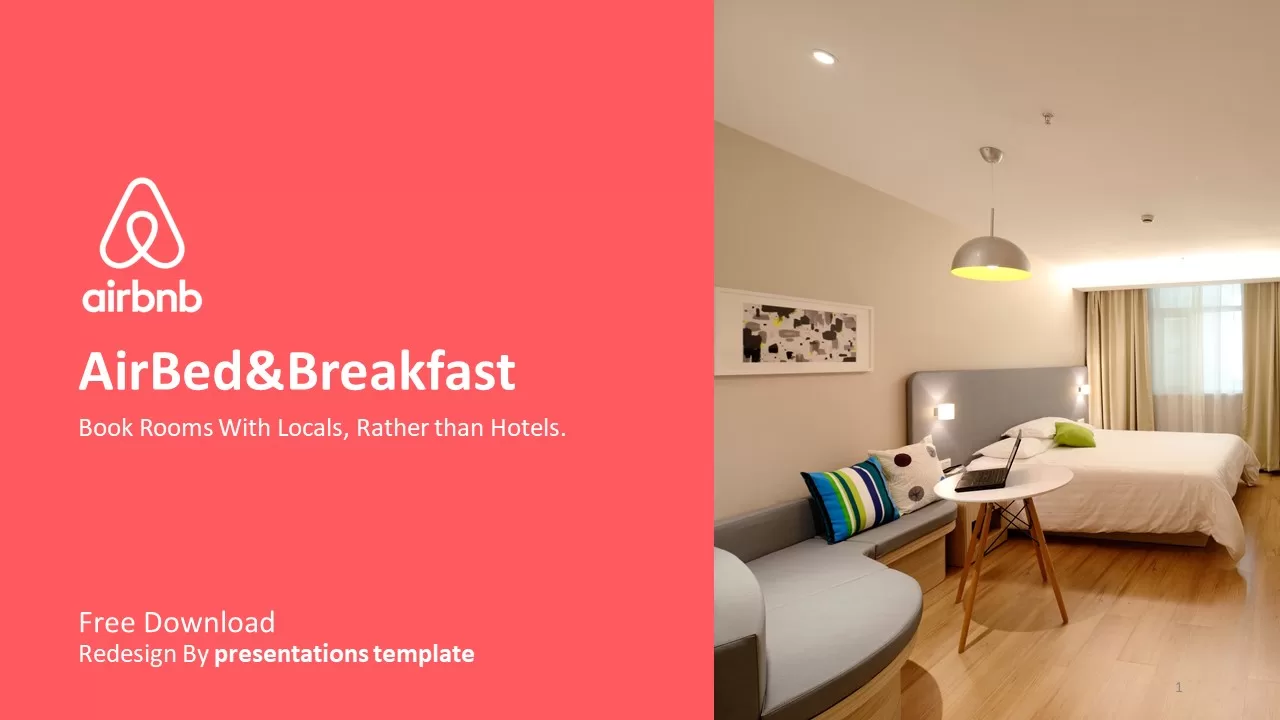
The 10 Must‑Have Slides from the Airbnb Pitch Deck That Supercharge Your Pitch
Ever wonder why Airbnb blew past countless competitors and snagged $600k in seed money? The secret isn’t just a great product—it’s a razor‑sharp deck that tells a story investors can’t ignore. Below I break down each of the ten slides that made the difference, and show you how to adapt them for your own venture.
Slide 1 – The Problem
What you’re solving
Start with a vivid picture of the pain point. I like to open with a relatable anecdote—maybe a traveler stranded because a hotel is fully booked. That instantly hooks the audience and frames the market gap.
- Identify the specific inconvenience.
- Quantify the impact with real‑world numbers.
- Show why existing solutions fall short.
Why it matters
Investors care about scale. I always tie the problem to a broader trend, like the rise of the sharing economy, to prove the upside isn’t a niche fling.
Slide 2 – The Solution
How you fix it
Here you flip the script. I showcase the product in a single, clean visual—think a screenshot of the Airbnb home‑sharing interface. Simplicity wins; avoid clutter.
- Show the core feature that resolves the pain.
- Highlight the user journey in three steps.
- Emphasize ease of adoption.
Proof points
Drop a quick metric—like a 30% increase in booking speed—to prove the solution works in practice.
Slide 3 – Market Size
Big picture opportunity
I paint the TAM with a bold, yet realistic, figure. It’s not enough to say “big”; you need to break it down: total travelers, online bookings, and the share you can realistically capture.
- Present total addressable market (TAM).
- Show serviceable available market (SAM).
- Identify serviceable obtainable market (SOM) for the first 3 years.
Why investors care
When you connect the dots between market size and your growth plan, the numbers start to feel tangible rather than abstract.
Slide 4 – Business Model
How you make money
Airbnb’s model is simple: take a commission on each booking. I replicate that clarity—list the revenue streams, pricing tiers, and any ancillary services.
- Commission per transaction.
- Premium listings or featured spots.
- Potential future services (e.g., insurance).
Unit economics
Show a quick unit‑economics chart. I calculate customer acquisition cost versus lifetime value; a healthy LTV:CAC ratio reassures investors.
Slide 5 – Traction
What you’ve achieved
Numbers speak louder than words. I list key milestones: users, bookings, revenue growth, and press mentions. Keep it visual—use a line graph or bar chart.
- Monthly active users.
- Bookings per month.
- Revenue month‑over‑month growth.
Why it matters
Traction validates demand and reduces perceived risk. When you can point to real data, the deck moves from hypothesis to proof.
Slide 6 – Go‑to‑Market Strategy
How you’ll win customers
I break the plan into three phases: early adopters, viral growth, and scaling. Each phase gets a channel focus—social media, partnerships, or paid acquisition.
- Leverage community influencers.
- Partner with travel blogs.
- Invest in targeted ads after product‑market fit.
Milestones
Attach a timeline with clear checkpoints. Investors love seeing when you’ll hit the next user‑growth milestone.
Slide 7 – Competition
Who else is playing
Instead of a bland list, I map competitors on a 2‑by‑2 matrix—price vs. experience. This visual instantly shows where you sit.
- Identify direct rivals.
- Highlight indirect threats.
- Explain your unique advantage.
Moat
Explain the defensible edge—network effects, brand trust, or proprietary data—that keeps competitors at bay.
Slide 8 – Team
Who’s behind the idea
Investors bet on people. I showcase each founder’s relevant background in a concise, bullet‑point format.
- Founder A – former engineer at a major travel platform.
- Founder B – growth marketer with a track record of scaling startups.
- Advisors – seasoned VCs and industry veterans.
Why you’re the right team
Connect past successes to the current mission. When you can say “I built a 10‑k user community before,” credibility spikes.
Slide 9 – Financial Projections
What the numbers look like
I keep the forecast simple: three‑year revenue, expense, and EBITDA columns. Highlight the break‑even point and the upside after scaling.
- Year‑1: focus on user acquisition.
- Year‑2: monetize core base.
- Year‑3: expand internationally.
Assumptions
Briefly list the key assumptions—conversion rate, churn, and average booking value—so investors can follow your logic.
Slide 10 – The Ask
What you need
State the amount you’re raising, the equity you’re offering, and the intended use of funds. I break the use‑of‑capital into categories: product, marketing, and hires.
- Product development – 40%.
- Customer acquisition – 35%.
- Team expansion – 25%.
Closing hook
End with a memorable line that circles back to the problem you opened with. I like to say, “Together we can turn every empty room into a revenue engine.” That leaves the room buzzing.
Conclusion
Those ten slides form a blueprint that turned a simple idea into a multi‑billion‑dollar company. By mirroring the structure, you give investors a clear narrative, solid data, and a reason to bet on you. Grab a template, inject your own story, and watch the magic happen.